

👋 Hey, it’s Wes. Welcome to my bi-weekly newsletter on managing up, leading teams, and standing out as a high performer. Check out my intensive course on Executive Communication & Influence. You’ll learn alongside mid-career operators from Netflix, Stripe, Meta, Figma, Anthropic, etc. → Join the May 2026 cohort
⛑️ If you’re looking to dramatically improve your communication and leadership, learn more about 1:1 coaching.
Read time: 6 minutes
I often get readers who ask, “Wes, if I’m not naturally loud, how do I speak up or talk about my accomplishments? How do I gain more visibility, either internally in my company or externally online?”
As a fellow introvert, I can relate.
No joke, in elementary school, I was so shy I used to not raise my hand to use the bathroom during class because I didn’t want 30 of my classmates to look up when I came back into the classroom.
That’s right, I chose physical discomfort to avoid drawing attention to myself.
So I’ve come a long way over the years, as a founder who’s been on ~50 podcasts (including Lenny’s Podcast), spoken at SXSW twice, taught as a guest lecturer at top 10 MBA programs, in addition to leading countless internal team meetings, speaking at all-hands, sharing business updates, etc.
Here are a few ways I get myself to speak up and share more.
1. Decide to speak before the meeting starts.
Tell me if this sounds familiar:
You: “Hmm I don’t know if I agree with what Joe just said. Should I say something? I’m not sure. What if I don’t explain myself well? What if people disagree with me? Okay, I should speak. No I shouldn’t. Okay yes, I should. Oh no, the group has already moved on.”
Is this you? This was me too.
If you try to decide during the meeting, you’re going to miss your window. Decide BEFOREHAND that you’ll share your point of view and speak at least once during the meeting.
This way, you’re not debating whether to speak, you’re looking for an opening of when to do it.
2. Try to speak early on in a meeting.
I’ve worked with many coworkers who were naturally extroverted. They didn’t overthink, and they felt comfortable speaking up when they were 60% confident they were right. It’s hard to compete with colleagues who don’t rehearse what to say in their mind before saying it.
This is why I try to speak first in big meetings. I try to get it out of the way and prevent someone else from saying what I wanted to say.
Is this at odds with the advice of “leaders should speak last”? I would say no.
The variable here is power dynamics. If you are nervous about not being able to speak up, presumably it’s because you’re not the most senior person in the room. Many managers are confident speaking to their direct reports or folks more junior, but get self-conscious when presenting to senior leadership, peers, or the entire company. This is very normal.
So when you are among peers and higher ups, it’s fine if you speak first, especially if waiting to speak means you might end up not speaking at all.
3. Share more in writing.
Not all “speaking up” has to happen verbally. Another way to speak up more is to share more in writing. A well-written doc can get circulated in your organization and get shared in rooms you’re not in, with leaders much more senior than you. Some docs even outlive the person who wrote them.
If you have an idea that’s hard to describe in 45 seconds to an impatient audience, I recommend drafting a doc that’s easy to read and pitches your idea. In your doc, you can describe the problem, cost of inaction, potential solutions, etc.
When you make a business case and share an evidence-backed point of view, you show good judgment. If you show that X problem is costing your company money, you may get senior leaders’ ears to perk up.
When you write, you create an artifact. You create a concrete record of yourself contributing useful solutions, which builds your credibility.
In terms of sharing ideas externally, writing a newsletter/blog or sharing on LinkedIn is great too. I started my blog in 2010, where I shared teardowns of ad campaigns (like my analysis of this Airbnb ad), marketing insights, etc. Writing regularly helped sharpen my thinking back then, and still does every week. It shows you’re passionate about your craft and actively thinking about the world around you.
More on how to speak up, even if you’re afraid of being wrong.
4. Prepare go-to phrases to insert yourself.
When you're armed with a few go-to phrases, you’ll be able to jump in before the moment passes. So get ready to unmute yourself on Zoom and say:
“Yes, to add some color on that...”
“That's a great point. My POV on this is...”
“I love that you brought that up. The thing we need to remember is…”
The other benefit of having go-to phrases: you buy yourself time. Even an extra second can help give yourself a beat to think of how you want to articulate your idea.
5. Look more authoritative on Zoom.
I find it a lot easier to chime in on Zoom than in IRL meetings. If you work remotely, use this to your advantage.
Sit higher in your chair so you don’t look short on camera. Get a $50 box light on Amazon so you’re well lit. Try to have a good “shoulder line” so your shoulders look defined against your background. When you fill the frame and look good, you'll feel powerful and remind yourself you have a lot to share.
I actually think Zoom meetings are amazing for introverts. In an IRL meeting, it’s easy to get nervous if you see 10 or 15 or 20 people sitting around a table. But in Zoom, everyone is in a one inch box on your screen--this can help reduce anxiety from a public speaking perspective.
More on how to prevent insecure vibes.
6. Ask a colleague to keep you accountable.
One of my direct reports wanted to practice speaking up more in meetings.
I asked how I could best support her, and here’s what we agreed on: If we were in meetings together, I would send her a Zoom chat DM saying, “Hey I think you could share something on this. No pressure.”
Then she would often unmute herself to chime in.
If you aren’t in a position to ask your manager for help, do this with a trusted colleague. Give each other a gentle nudge and help boost each other up.
To recap, here are the tactics you can try:
Decide to speak before the meeting starts.
Try to speak first, or early on.
Share more in writing.
Prepare go-to phrases to insert yourself in meetings.
Look more authoritative on Zoom.
Ask a colleague to keep you accountable.
Thanks for being here, and I’ll see you in two weeks on Wednesday at 8am ET.
Wes
Course update: May 2026 cohort is now 55% full
I just wrapped up an incredible March cohort two weeks ago. Every time I run the course, I’m humbled by the talented operators who join and learn together.
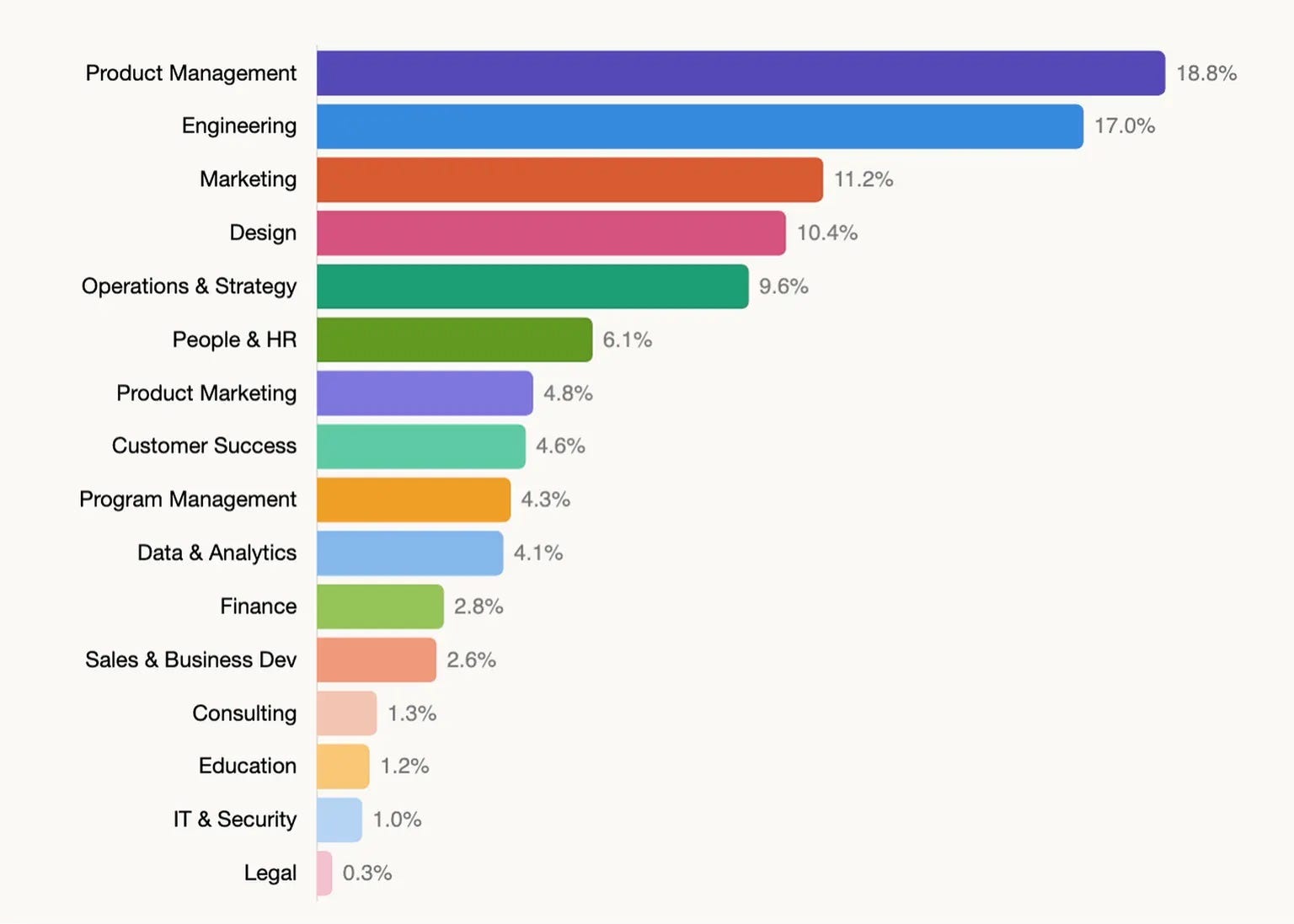
Of the 1,700+ tech operators who have taken the course so far, there’s a wide range of functions represented, with the largest groups from product, engineering, and marketing:
New student reviews from this month’s cohort are rolling in. Here’s what folks are saying:
“At the risk of being hyperbolic, spending these 6 hours in the course may have been some of the most insightful and impactful hours of my career. The course was concise and extremely tactical, and illuminated countless improvements I can make to communicate more effectively with leaders, and be seen as a leader myself.”
- Cadence Greenberg, Senior Research Manager @ The New York Times
“I was skeptical with the value the training can bring in such a short time, but Wes managed to change my perspective on multiple concepts in minutes. The bonus material also gives me things to read and implement in the coming weeks and months.”
- Barbara Bihari, Senior Integration Manager, Strategic Partnerships @ Kayak
“This course is packed with frameworks and insights, and delivered in a way that is digestible and immediately actionable. I feel equipped with the right tools to out into the world and put this new information into practice. Wes is an engaging presenter and makes a large Zoom feel very communal. It’s also really well-paced for the amount of content we move through. Highly recommend.”
- Kaela Chandrasekaran, Staff User Researcher @ Asana
“This course is a gold mine and worth every penny. I’ve struggled with communicating my ideas, being concise, and ensuring I’m giving the right amount of context depending on my audience. Everything in this course was super actionable and I’ve already put some of these learnings into practice.”
- Beth Saunders, Senior Community Manager @ Amplitude
“I wish I had taken this course earlier. Wes shared some incredibly practical tools that, if applied, can meaningfully uplevel the way you work and communicate.”
- Manohar Sripada, Engineering Manager @ Meta
The upcoming May cohort is already 55% full. So far, the cohort includes operators from Adobe, Experian, OpenTable, Webflow, Visa, Google, Robinhood, Discord, Hims & Hers, Zendesk, Yelp, 1Password, Shopify, etc.
If you’ve been thinking about joining, I hope to see you in class. Learn more about the course.
Connect with Wes
Is this your first time here? Subscribe (it’s free)
Follow me on LinkedIn for more insights
Learn more about 1:1 coaching to sharpen your executive presence
Improve your ability to sell your ideas, manage up, gain buy-in, and increase your impact in a 2-day workshop. Over 1,700 tech operators have taken this course, and every cohort so far has sold out. → Save your spot
The bathroom story is the one that landed. Not because it is unusual but because most introverts will recognise exactly that calculation choosing discomfort to avoid attention.
The six tactics are genuinely useful and the decide before the meeting starts one is the most important because it removes the in-the-moment cognitive load entirely.
What I want to add is the observation underneath all of them. These tactics help introverts adapt to rooms that were not designed for them. Most meeting structures reward thinking out loud, speaking first, filling silence. These are not neutral formats. They were built by and for a particular kind of thinker, and they systematically surface certain kinds of ideas while burying others.
The introvert who speaks after thinking has often thought harder about what they are about to say than the person who spoke immediately. That does not show up in most meeting cultures as a feature. It shows up as hesitancy.
The tactics help. The room is still the room.
As an introvert I can relate to a bunch of strategies mentioned. Remote work definitely gives an edge.