

👋 Hey, it’s Wes. Welcome to my bi-weekly newsletter on managing up, leading teams, and standing out as a high performer. To level up faster, check out my intensive course on Executive Communication & Influence. You’ll learn alongside mid-career operators from orgs like Netflix, Stripe, OpenAI, Meta, Anthropic, etc. → Save your spot
⛑️ If you’re looking to dramatically improve your communication and leadership, learn more about my coaching approach.
Read time: 4 minutes
I once had a direct report, we’ll call him Matt, who kept submitting work with errors, typos, weird formatting, and bad writing that increased cognitive load for customers.
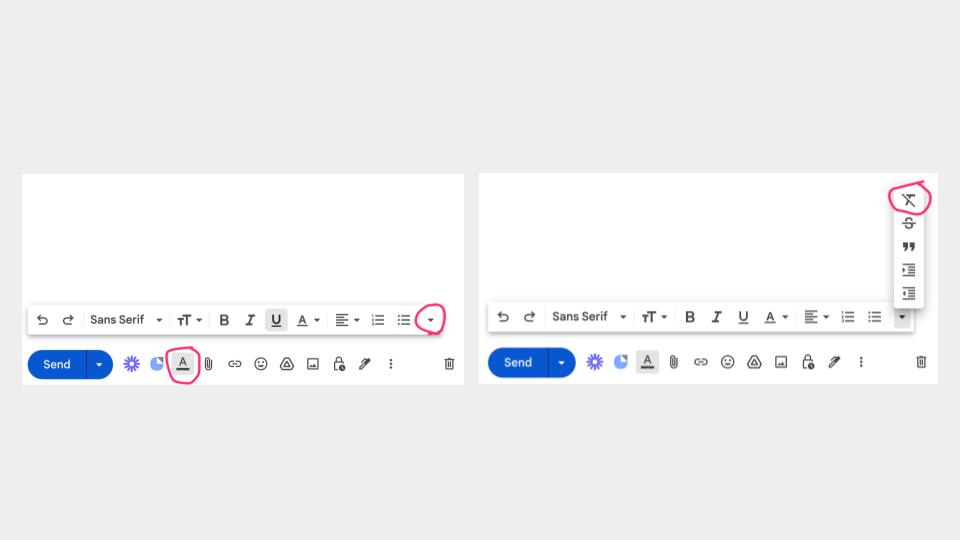
I would repeatedly remind him to use the clear text feature in Google Docs/Gmail, which, if this is the first time you’re hearing about it, is a game-changer. That little Tx button has saved me from sending emails where the “Hi First Name” looks obviously copied/pasted because the font was size 14 in Verdana when the rest of the email was size 12 in Arial. This isn’t even the point of the story, but I think more people would benefit from cleaning up their email formatting, so here’s how you do it:
One day, I sat him down and said,
“Matt, I need you to pretend like your reputation is on the line when you send work to me. I am judging you for this work. I know this isn’t your best. Even though you are signing these emails under our organization’s name, I need you to pretend you’re signing it as Matt, and sending this email to 50,000 of your friends and the public."
Your work is the average of what you ship. If you’re not proud of it, consider investing in improving your craft, finding a function that’s a better fit, or whatever else you think will allow you to show how good you really are.
A tiny percentage of you might say, “Wes, I would publish work with typos and bad grammar under my own name. I don’t mind.”
First of all, this:
Second, you might not mind, but your organization does. Sloppiness reflects poorly on your brand, distracts from your message, and erodes trust. If you’re going to do 90% of the work, you might as well do the last 10% to give it another read and put your stamp of approval on it.
Ask yourself:
If I were signing off with my name, would I make this better?
Is there sloppiness that might reflect poorly on me or my company?
Am I passing the burden to others to fix my errors?
Does the work I’m shipping represent my ability?
Improve your weaknesses so they’re not a blocker
If you’re saying, “I just can’t be detail oriented and don’t want to try,” I will say, “Cool, I will hire someone who is or can be, because the details matter in this job.”
For most knowledge worker roles, being able to produce work that’s error-free most of the time is a prerequisite. I’m not saying you need to be in the 95th percentile of detail orientation.
You may be surprised to find that I’m not even that bothered by typos, and think they’re the least egregious type of error. I’m saying if you want to be trusted with more responsibility, you need to be able to produce work that is generally error-free because your manager can’t always be your safety net.
Back to the story of my direct report Matt. Matt admitted that he felt like I’d always catch his errors, so he felt more lax about it. I get that.
You might say, “Wes, you enabled him to be less detailed.”
Perhaps I did. But this quip is not as clever as you think. Because what’s the alternative? Let him send an email to 50,000 customers and make them suffer?
Andy Grove, co-founder and former CEO of Intel, said it well:
“The responsibility for teaching the subordinate must be assumed by his supervisor, and not paid for by the customers of his organization, internal or external.”
The idea of “let the person fail and they’ll learn” makes sense in theory, but in reality, it’s not worth sacrificing brand credibility and taxing your customers for an employee to learn a lesson. Don’t make your manager or customers pay for your weaknesses. You don’t and probably can’t turn weaknesses into strengths, but you can and should reflect on which weaknesses you want to improve on enough so they aren’t a blocker for you.
I’ll end with a story that should gives you hope.
Most people assume I was always good with details. The truth, is I used to be super disorganized.
For example, in junior high school, I missed assignments because I forgot about them, or jotted it in one of many notebooks, then forgot which one.
In my sophomore year of college, I did an internship at a tech PR firm. One of the senior leaders chewed me out because he asked me to organize an Excel spreadsheet, and when I turned in my finished work, he rightfully pointed out all the ways the spreadsheet was messy with random font sizes, centered vs left justified text, etc. I didn’t see it until he pointed it out. But from that day on, I knew what to look for and trained my eye to notice formatting.
Even to this day, I have myriad systems in place (checklists, calendaring, alarms before meetings, and yes, still using the clear formatting Tx button in Gmail) to make sure I don’t let a lack of detail orientation screw me over.
Most skills are learnable and you can make many mistakes, but don’t get stuck in a loop repeating the same mistakes over and over. Ideally, you graduate to making better, smarter mistakes, and you improve enough so your weaknesses don’t become prohibitive.
Thanks for being here, and I’ll see you in two weeks on Wednesday at 8am ET.
Wes
✨ Course update: What engineers are saying about “Executive Communication & Influence”
The May cohort is now sold out, but I opened a new July cohort with the dates of July 16th and 17th. The cohort opened last week and there are already operators from Figma, Amazon, Mozilla, Grammarly, Stripe, OpenAI, etc signed up.
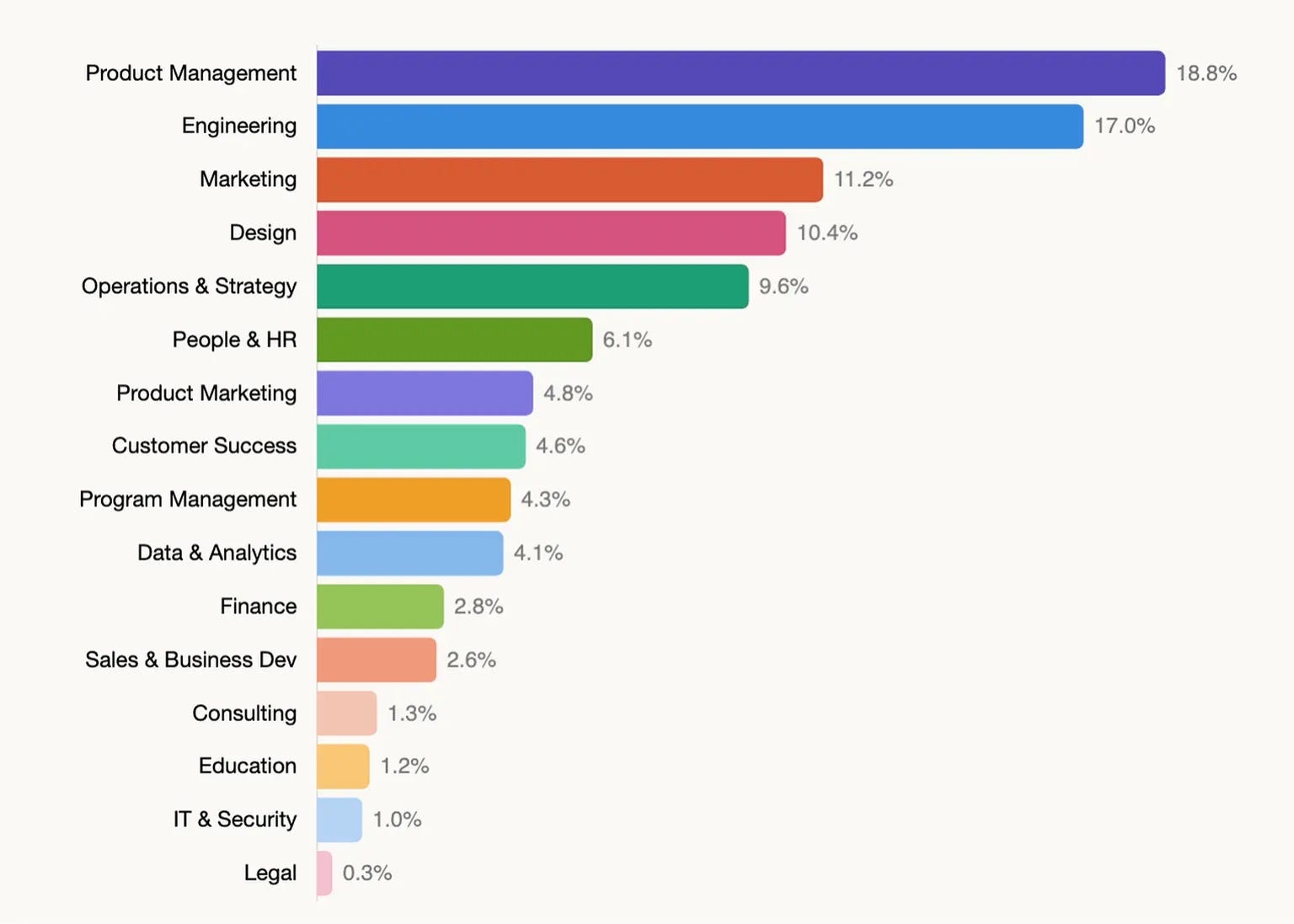
In my private coaching practice, about 1/3 of my clients are technical. My clients include eng managers, staff engineers, startup CTOs, technical founders, VPs of data science, etc. And engineers make up the second largest function in my course:
Technical people can be hard to please. They’re usually hyper rational, logical, and have a low tolerance for hand-waviness.
This is probably why engineers like my course so much.
I built this course because I was frustrated that most communication resources were too basic or too vague. My course treats communication as a skill, one where there are underlying principles and a bell curve for the quality of your execution. My goal is to help you see differently, so you notice what you can improve in your own speaking and writing. Then you can build intuition over time, so communicating well becomes faster and more instinctive.
The question you might be asking is, “Is the course worth it?”
Here’s what engineers are saying:
“[Wes’ course] provides a great foundation to level-up your comms, and practical tools which you can use in nearly any scenario.” - Samuel Kramer, Forward Deployed Software Engineer, OpenAI
“I wish I had taken this course earlier. Wes shared some incredibly practical tools that, if applied, can meaningfully uplevel the way you work and communicate.” - Manohar Sripada, Engineering Manager, Meta
“The course shows what great communication looks like and bar that you can aim for. The exercises were very useful in determining your current level and reading through answers from different students gives a lot of different perspectives. I will be coming back again and again to review the content as I gradually build up by communication skills.” - Srihari Venkatesan, Engineering Manager, Apple
“Great course that summarizes foundational wisdom, principles, and actionable steps for effective communication.” - Alexei Koulikov, Engineering Manager, Shopify
“I got a ton of value out of this course, you move fast, cover a lot. Written communication, presentation to execs, informal / verbal, etc... The exercises are where the real learning is at, easy to be an armchair expert but these helped me feel where my deficiencies are” - David Illing, Senior Data Engineer, Credit Karma
“Great course overall. Lots of great actionable advice and insight into what it means to execute at the next level.” - Oscar Funes, Senior Staff Engineer, PayPal
“Lots of communication and influence is super abstract. This course was a really great way to structure things tangibly. I am excited to try out these ideas and convey them to peers/reports.” - Suvir Jain, Engineering Manager, Stripe
I hope to see you in class. If you’ve been thinking about joining, check out course details.
Connect with Wes
Is this your first time here? Subscribe (it’s free)
Follow me on LinkedIn for more insights
Learn more about 1:1 coaching to sharpen your executive presence
✨ Course: Improve your ability to sell your ideas, manage up, gain buy-in, and increase your impact in a 2-day workshop. Over 2,000 tech operators have taken this course, and every cohort so far has sold out. → Join the July cohort
You should look up the research on "stereotype threat". For many people, the fear of being judged (in this case as not detail oriented) makes us so self conscious we are MORE likely to make the mistake we fear most being judged for.
In this case, your well intentioned approach might have the exact opposite impact you are hoping for.
I think there's no need to pretend that the reputation is on the line with every piece of work delivered whether it's an email or a big project. I used to say to my team too that the work they show to me must be the work they're proud of. It doesn't mean it's perfect. It means they gave their best today. And our best looks different every day. Plus, we all learn continuously whether we admit it or not.